【News】KMU Unveils Two University-Level Research Centers to Advance Metabolic Disease Prevention and Innovation in Healthcare Technology and Policy
KMU Unveils Two Research Centers to Advance Metabolic Disease Prevention and Innovation in Healthcare Technology and Policy
October 15, 2026 (News link)
Kaohsiung Medical University (KMU) held a joint unveiling ceremony for its Research Center for Metabolic Diseases and Obesity and Research Center for Healthcare Technology and Policy on October 14. Established to integrate interdisciplinary research resources and strengthen connections among academic research, clinical practice, healthcare technology, and public policy, the two university-level centers mark a new stage in KMU’s development in these fields.
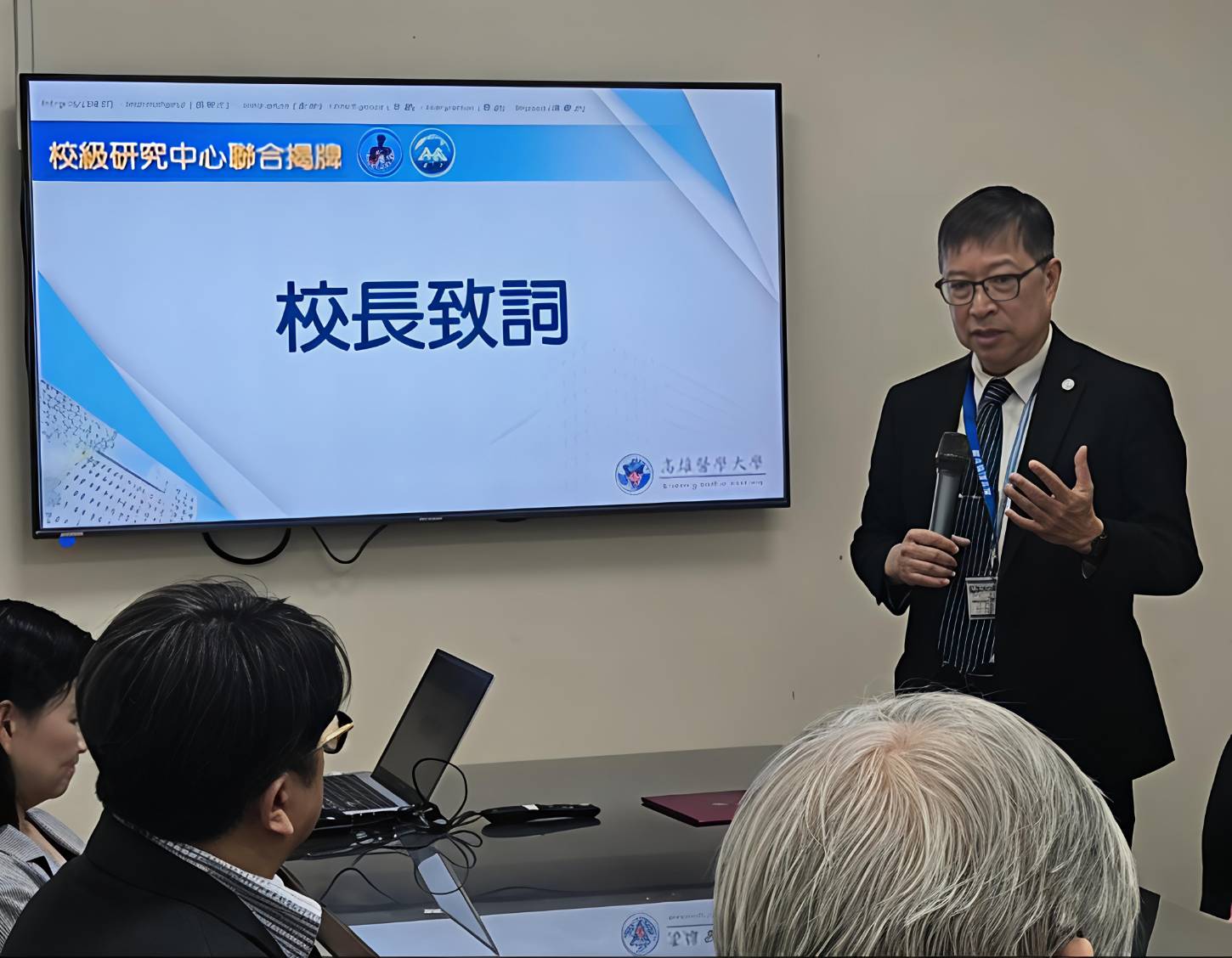
KMU President Ming-Lung Yu noted that changing disease patterns, demographic shifts, and rapid advances in medical technology have made healthcare challenges increasingly complex. No single profession or discipline can fully address them. Building on KMU’s longstanding strengths in clinical medicine, public health, and basic research, the two centers aim to bridge disciplinary boundaries and connect expertise and research resources within and beyond the university. Their work will extend beyond academic achievements to address clinical needs, health policy, and practical challenges facing society. The centers will also cultivate interdisciplinary research talent, strengthen domestic and international collaboration, and develop distinctive research platforms with international influence.
Lifetime Chair Professor Wan-Long Chuang, Director of the Research Center for Metabolic Diseases and Obesity, explained that the center’s core vision is to reduce avoidable premature deaths. Focusing on the long-term health effects of obesity and metabolic dysfunction, the center will study metabolic dysfunction-associated steatotic liver disease (MASLD) and obesity, including their links to cardiovascular disease, liver and kidney diseases, and cancer. Its goal is to identify high-risk populations earlier and develop appropriate prevention strategies before serious complications arise.
The center will pursue three research priorities: health monitoring, risk prediction, and intervention validation. Nationwide data will be used to map the distribution and trends of metabolic syndrome, fatty liver disease, and obesity, helping identify health needs across regions and population groups. By integrating longitudinal follow-up, clinical data, and multi-omics analyses—including genomics and proteomics—the center will use artificial intelligence to develop and validate methods for predicting risks across organ systems. Lifestyle interventions and clinical trials will then assess the effectiveness and safety of exercise, nutrition, medications, and other strategies.
The center aims to move disease prevention and management to an earlier stage. Beyond identifying who is at risk, it will investigate when and how to intervene and which approaches meaningfully improve long-term health. Through interdisciplinary and international collaboration, it will build evidence tailored to Taiwan’s population to support clinical decision-making, public health, and health promotion.
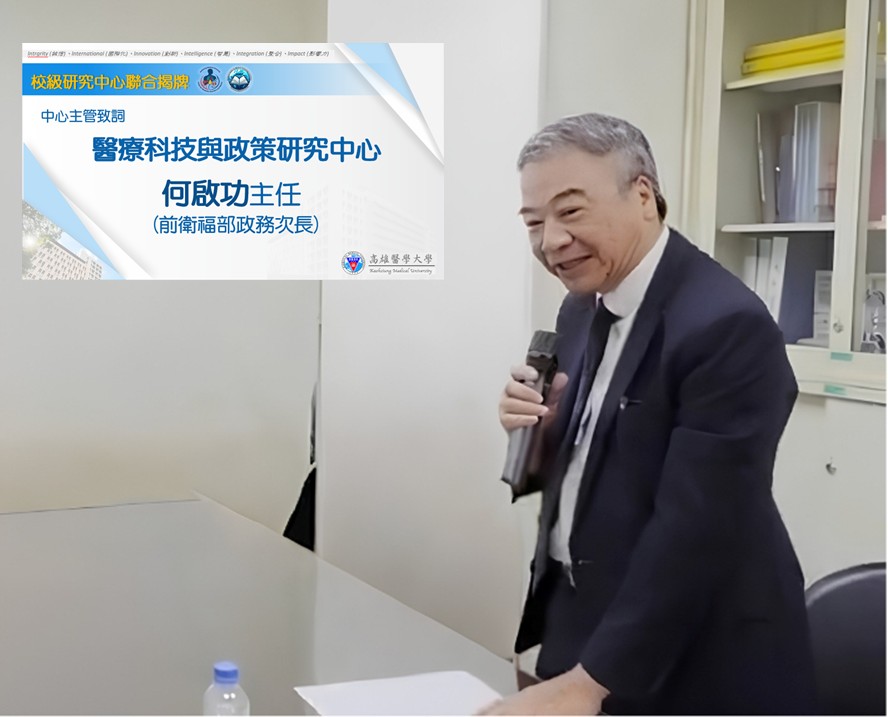
Professor Chi-Kung Ho, Director of the Research Center for Healthcare Technology and Policy, highlighted Taiwan’s overlapping challenges: growing care needs in a super-aged society, healthcare workforce shortages compounded by declining birth rates, the financial sustainability of National Health Insurance, and the transition toward AI-enabled healthcare. Healthcare policymaking must go beyond theoretical discussion and be grounded in rigorous analysis of clinical data and evaluation of real-world outcomes, supported by forward-looking policy translation and practical analysis.
Professor Ho emphasized that the center will operate through a research–translation–advocacy framework. Drawing on his experience in national health administration and public health, the center will identify government policy priorities and health and welfare needs, translating the KMU healthcare system’s clinical data and research strengths into practical policy recommendations that health authorities can understand and implement. Through close communication and coordination, it will align the university’s research capabilities with national health policy priorities. The center will serve as a bridge supporting the national Healthy Taiwan vision and provide a strong evidence base for Long-Term Care 3.0, National Health Insurance payment reform, and precision cancer screening.
KMU stated that the establishment of these centers represents both a milestone in integrating research resources and a continued commitment to interdisciplinary research, industry–academia collaboration, and practical engagement. By developing research teams, promoting collaboration across disciplines, and connecting external resources, KMU will strengthen its research capacity and academic competitiveness. These efforts will help translate research findings into clinical applications, healthcare policy, and societal practice, building internationally influential research strengths that respond to Taiwan’s healthcare and social development needs.
|
▲ 校長致詞 |
▲ 代謝性疾病與肥胖研究中心-莊萬龍講座教授致詞 |
▲ 醫療科技與政策研究中心-何啟功教授致詞 |
|
▲ 校及學術研究中心-「代謝性疾病與肥胖研究中心」揭牌 |
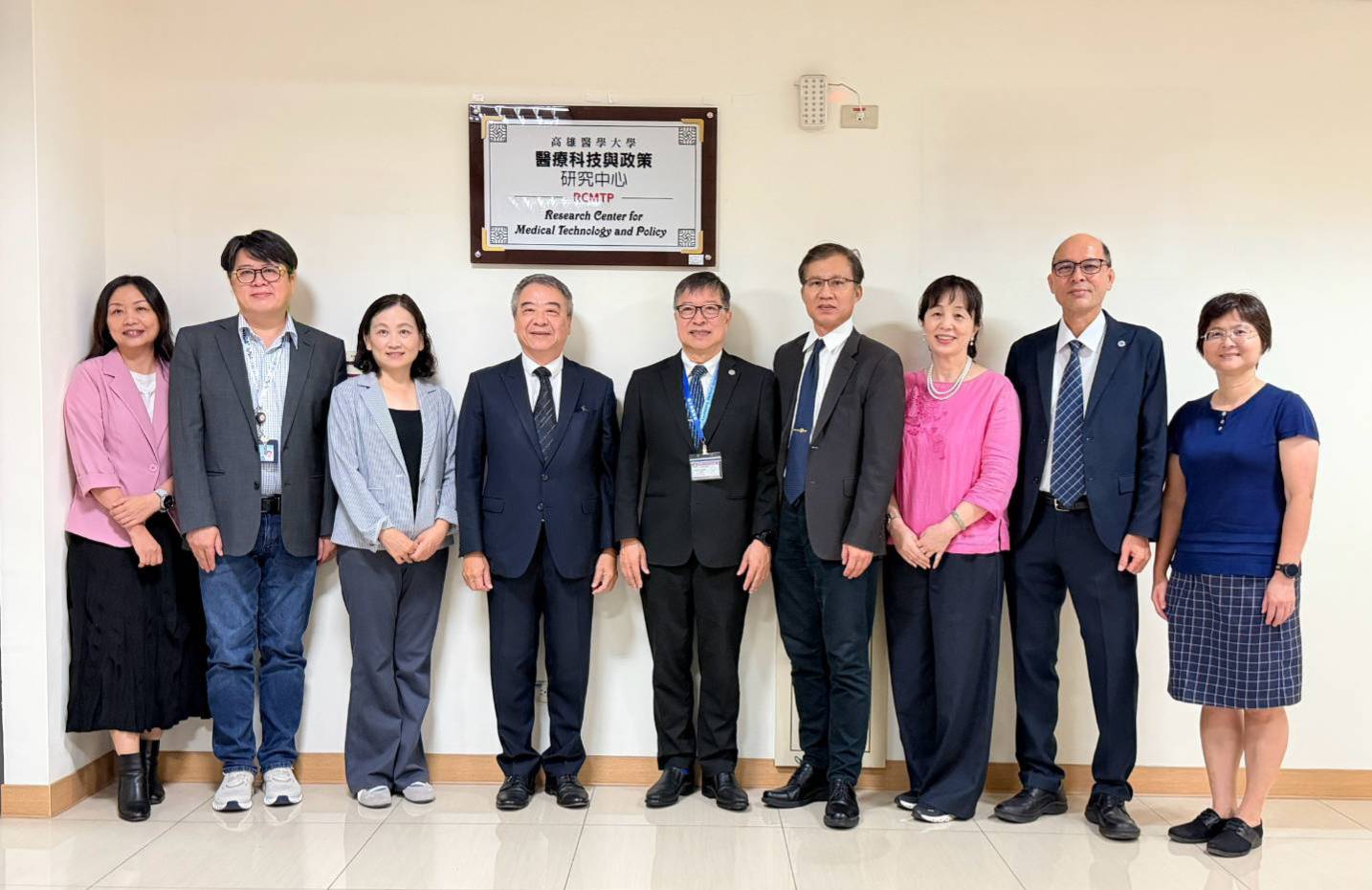
▲ 校級任務導向型研究中心-「醫療科技與政策研究中心」揭牌 |