
Making Cancer Cells Visible Again: A New Platform Reactivates Antitumor Immunity
College of Health Sciences / Department of Medical Laboratory Science and Biotechnology,
Professor Chih-Hung Chuang’s research team at the Department of Medical Laboratory Science and Biotechnology, Kaohsiung Medical University, has long focused on cancer immunotherapy and innovative antibody drug development. Their recent project, “Development of a Tumor Microenvironment-Activated Immunocytokine Platform to Overcome Resistance to Immune Checkpoint Therapy and Expand Cancer Immunotherapy,” received the 2026 FutureTech Award, highlighting its potential for both scientific innovation and clinical translation.
Immune checkpoint inhibitors have become an important strategy in cancer treatment, yet some patients show limited responses or gradually develop treatment resistance. One major reason is that certain tumors reduce immune-recognition signals such as MHC-I, allowing cancer cells to become less visible to the immune system. In addition, excessive systemic immune activation may cause significant adverse effects. Therefore, overcoming treatment resistance while improving both efficacy and safety remains a major challenge in cancer immunotherapy.
Professor Chuang’s team developed a tumor microenvironment-activated pro-immunocytokine platform that integrates interferon with immune checkpoint-blocking antibodies. Through a dual-prodrug design, the activities of both components are temporarily reduced, allowing the drug to remain less active in normal tissues and become “unlocked” by specific proteases after entering the tumor microenvironment. The key breakthrough of this strategy is that it does more than simply enhance immune activation; it actively reshapes the tumor immune microenvironment. Interferon can increase MHC-I expression on tumor cells, improving their recognition by the immune system, while immune checkpoint blockade further restores T-cell activity. Together, these effects can convert poorly responsive “cold tumors” into more immunologically active “hot tumors,” restore treatment responses, and reduce toxicity caused by systemic immune activation.
In the future, this platform can be adapted to different cancer types and therapeutic needs by combining different interferons, immune checkpoint antibodies, or other therapeutic antibodies, giving it strong modularity and extensibility. Academically, it may support further investigation into the relationships among the tumor microenvironment, protease activity, and antitumor immune responses, helping to establish more precise treatment strategies. From an industrial perspective, the platform has potential for candidate drug development, manufacturing scale-up, preclinical validation, technology licensing, and international co-development. The team has already established patent protection in Taiwan and through the PCT system and will continue to collaborate with biotechnology and pharmaceutical companies to accelerate clinical translation and provide new treatment options for patients who respond poorly to or develop resistance to current immunotherapies.
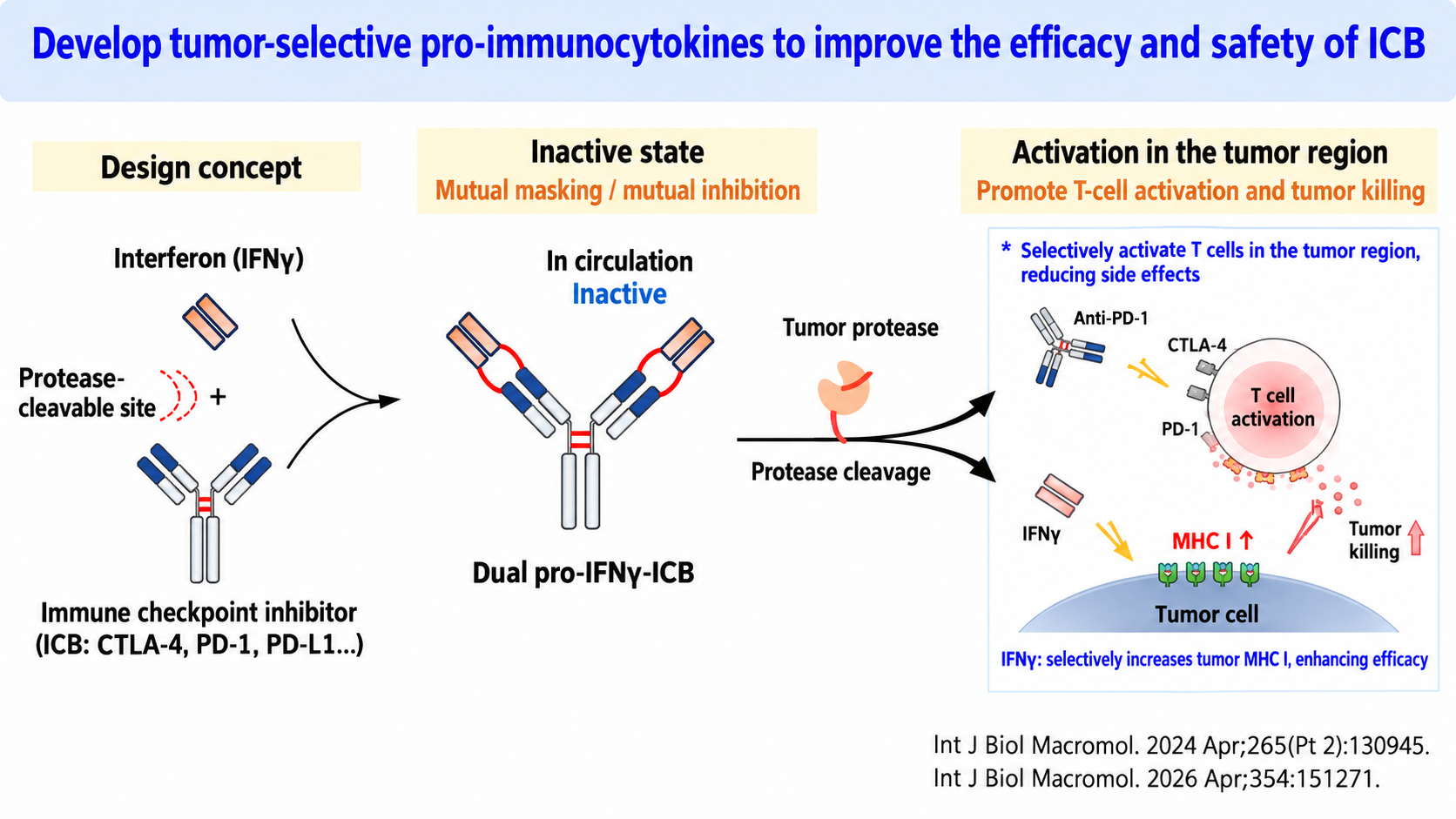
Figure 1. Design concept

Figure 2. Core Team Members