
Fewer Osteoporosis Diagnoses, Yet More Fractures? New Insights into Statin Use in CKD
Affiliation: Department of Orthopedics, College of Medicine / Regenerative Medicine and Cell Therapy Research Center
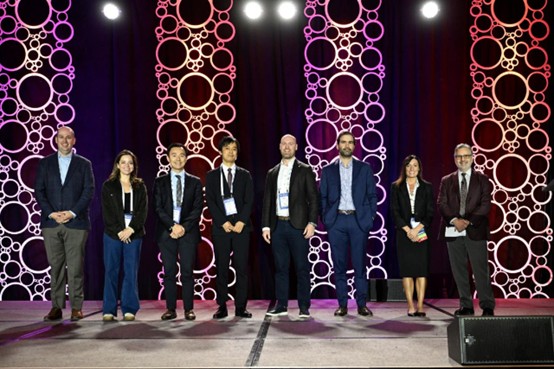
Selected in 2026 ORS (Orthopaedic Research Society) as OREF/ORS Travel Grant in Research Translation
Chronic kidney disease (CKD) affects more than 850 million people worldwide and is expected to become an even larger public health burden as diabetes, hypertension, and population aging continue to rise. Patients with CKD face substantially elevated risks of osteoporosis and fracture, driven by disturbances in calcium, phosphate, parathyroid hormone, and vitamin D metabolism collectively known as CKD–mineral and bone disorder (CKD-MBD). Statins, which are widely prescribed to reduce cardiovascular risk in this population, are also known to have pleiotropic effects beyond lipid-lowering — including actions on osteoblasts and osteoclasts through the mevalonate pathway — yet how different statin potencies specifically affect bone health in CKD patients had never been rigorously examined at scale, leaving clinicians with limited guidance on whether statin choice might carry hidden bone-related consequences.
To close this gap, the research team, led by Dr. Tien-Ching Lee (Department of Orthopedics, Kaohsiung Medical University Hospital), turned to the TriNetX US Collaborative Network, a federated database aggregating de-identified records from 68 healthcare organizations. After propensity score matching, the team analyzed 873,180 adults with CKD stages 3 and 4, directly comparing patients started on high-potency statins (atorvastatin 40–80 mg, rosuvastatin 20–40 mg) with those on low-potency statins across three outcomes: new osteoporosis diagnosis, initiation of anti-osteoporotic medication, and incident fracture. High-potency statin use was associated with a 20% lower rate of new osteoporosis diagnoses and roughly 25% fewer initiations of anti-osteoporotic medications during the first year of treatment, with both associations persisting beyond 12 months. Counterintuitively, fracture risk — essentially unchanged during the first year — rose by about 13% after 12 months in the high-potency group. Rather than reflecting a direct toxic effect of statins on bone, the team's analyses suggest this pattern most likely stems from a “diagnostic gap”: patients who were less often formally diagnosed with osteoporosis were correspondingly less likely to receive timely anti-osteoporotic treatment, leaving a subgroup of high-risk patients under-protected as time went on. This interpretation held up across an extensive set of sensitivity analyses stratified by CKD stage, statin lipophilicity, individual statin-to-statin comparisons, alternative CKD definitions, and persistent-user subgroups — underscoring the robustness of the findings.
This is the first large-scale, real-world study to characterize the differential bone effects of statin potency specifically within the CKD population, a group in which bone fragility is already compounded by CKD-MBD. The work was published in Osteoporosis International, a leading journal in the field, and was supported in part by the KMU Regenerative Medicine and Cell Therapy Research Center, reflecting the Center's broader mission of translating molecular and mechanistic insight into clinically actionable evidence for bone and tissue health. Clinically, the findings argue for heightened vigilance and proactive bone health screening in CKD patients who are prescribed high-potency statins, rather than treating statin selection and osteoporosis management as unrelated clinical decisions. Scientifically, the results open clear avenues for mechanistic follow-up — potentially leveraging regenerative medicine approaches — to clarify how statins modulate osteoblast and osteoclast signaling pathways, including BMP-2 expression and the RANKL/osteoprotegerin axis, under the distinct metabolic conditions of CKD. Building on this work, the team plans to pursue prospective studies incorporating bone-specific endpoints such as bone mineral density and bone turnover markers, and to develop integrated care models that pair statin selection with individualized fracture-risk assessment in CKD patients. Such translational efforts could ultimately support combined pharmacological strategies that bridge cardiovascular protection and bone-health preservation for one of the fastest-growing chronic disease populations worldwide, while also creating new opportunities for academic collaboration and industry partnership in the management of CKD-MBD.
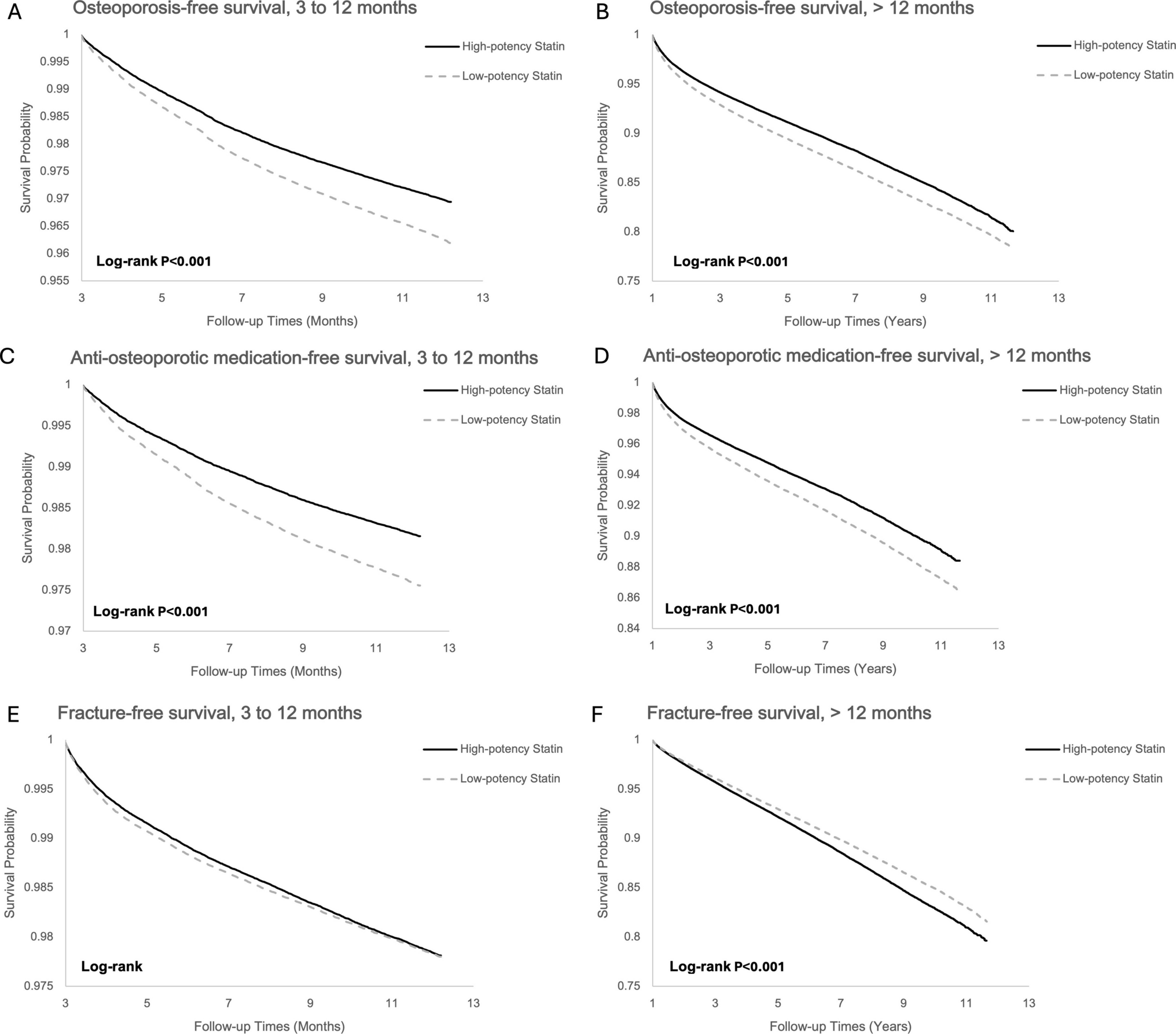
Figure 1: Kaplan–Meier curves comparing high- vs. low-potency statin users in the TriNetX US Collaborative Network for osteoporosis-free, anti-osteoporotic medication-free, and fracture-free survival (3–12 months and beyond 12 months)..
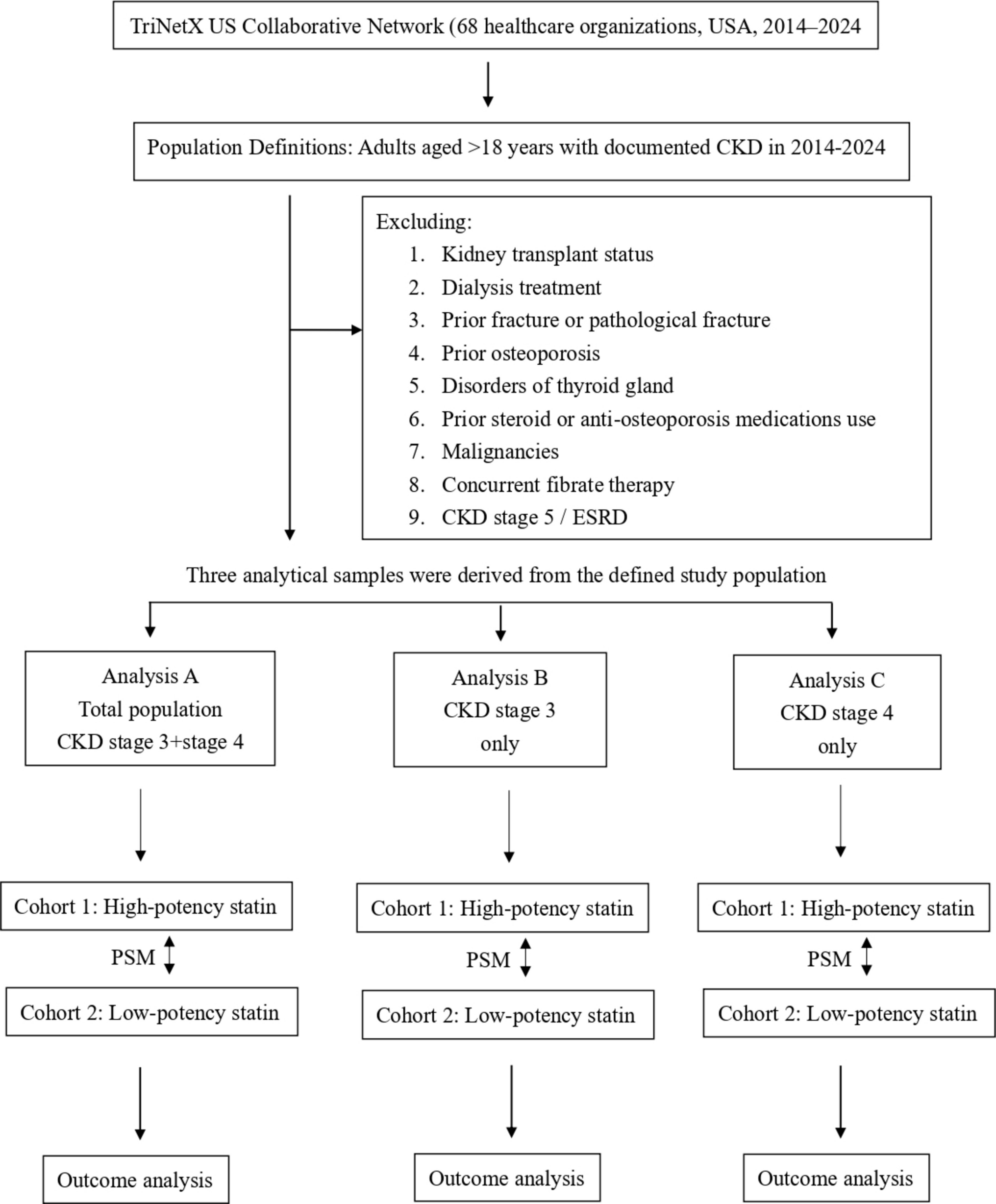
Figure 2: Study flow diagram illustrating patient selection and propensity score matching, yielding 873,180 matched patients with CKD stages 3 and 4.