
The Awardee of 64th Ten Outstanding Young Persons and His Works in Hepatobiliary and Pancreatic Cancers
Affiliation: Center for Cancer Research, Kaohsiung Medical University (jointly appointed Attending Physician, Division of Hematology and Oncology, Department of Internal Medicine, Kaohsiung Medical University Chung-Ho Memorial Hospital)
Pancreatic cancer is known as the “king of cancers,” largely because it is usually discovered only after it has already reached an advanced stage. Dr. Yung-Yeh Su of the Center for Research Center at Kaohsiung Medical University — who also serves as Attending Physician at the Assistant Investigator level in the National Institute of Cancer Research, National Health Research Institutes, and as a jointly appointed attending physician in the Division of Hematology and Oncology at KMU Hospital — has devoted his career to precision medicine for liver, biliary and pancreatic cancers, guided by a single principle: obtain the greatest number of answers from the smallest possible specimen. By breaking through decades of clinical blind spots, his work has successfully spanned three dimensions: top-tier academic breakthroughs, clinical technical innovations, and national policy reform, creating a beacon of hope for pancreatic cancer patients in Taiwan and across the globe. In 2026 he was selected as one of the Ten Outstanding Young Persons of the Republic of China (64th class, Medical Research category).
A biomarker misread for decades. The blood test CA19-9 is the tool most commonly used in the clinic to assess pancreatic cancer. Yet about one in ten patients is born with a Lewis antigen-negative constitution (a non-functional FUT3 gene) and simply cannot produce the marker, so even a large tumor returns a normal reading — and in the past these patients were often mistakenly judged to have mild disease. After analyzing a large domestic patient cohort, Dr. Su’s team proposed an entirely new set of CA19-9 interpretation thresholds that can at the same time infer a patient’s Lewis antigen status, making prognostic stratification considerably more precise. The study was published in 2026 in Clinical Cancer Research, the flagship journal of the American Association for Cancer Research (AACR); the association selected it for a worldwide press release, and it was covered by media in several countries. Its two co-first authors are a young physician and a doctoral student he co-mentors. Furthermore, he has set a brilliant milestone by winning the Young Investigator Award from the Japanese Society of Medical Oncology (JSMO) for four consecutive years (2022–2025), which not only leads the international academic community but also demonstrates the leadership of a young scientist stepping onto the global stage.
From a sliver of tissue to single-cell resolution. The pancreas lies deep within the abdomen, so tissue can usually be obtained only as a minute sample taken by endoscopic ultrasound-guided fine-needle aspiration. On these tiny specimens the team has successfully completed both next-generation sequencing and single-cell transcriptome sequencing, reaching a KRAS mutation detection rate of 85 to 95 percent and identifying a subpopulation of tumor cells of unusually high malignancy that drives poor outcomes. In liver cancer, he has worked with international collaborators to establish the criteria for judging pathological response to preoperative immunotherapy, and to clarify the decisive role that B cells and the tumor microenvironment play in long-term treatment benefit. These results appeared in The Lancet Oncology, the Journal of Clinical Oncology and the Journal of Hepatology. By pushing precision medicine to the ultimate resolution of the "single-cell level" under extremely limited specimen conditions, Dr. Su’s pioneering spirit has brought a revolutionary technical breakthrough to clinical cancer diagnosis.
From papers to policy, and from policy to new drugs at the bedside. Commissioned by the Health Promotion Administration, Dr. Su serves as executive secretary of the National Health Research Institutes’ Pancreatic Cancer Clinical Expert Advisory Panel. Drawing together the views of pathology, surgery and the pancreatology community, the panel defined Taiwan’s first set of nine quality-of-care indicators for pancreatic cancer, promulgated nationwide in 2023, and completed an analysis of nearly two thousand patients — giving quality of care, for the first time, a standard that can be tracked and compared. The team’s domestic KRAS testing results also successfully persuaded an international pharmaceutical company to bring a multinational clinical trial of a pan-KRAS inhibitor to Taiwan, allowing patients here to reach a new drug sooner. By transforming academic papers into national healthcare infrastructure, Dr. Su has established traceable and comparable standards of care and successfully brought new international drugs to Taiwan, truly fulfilling the altruistic mission of saving lives through precision medicine. Looking ahead, he will continue to advance a multinational hepatobiliary and pancreatic cancer database together with investigator-initiated clinical trials, so that Taiwan does not merely take part in international standards but helps to define them.
Embodying the role of a clinician, a scientist, and a driving force behind national health policy, Dr. Yung-Yeh Su perfectly illustrates the breadth and depth of a contemporary role model for today's youth. He walks hand-in-hand with young physicians and doctoral students, passing the torch to the next generation of scientific talent. Receiving the 64th Ten Outstanding Young Persons award is not only the highest personal recognition for Dr. Su but also a shining milestone for the KMU Cancer Research Center on the international biomedical stage.
Key publication: Clinical Cancer Research (American Association for Cancer Research), 2026 — new CA19-9 interpretation thresholds that simultaneously infer Lewis antigen status and refine prognostic stratification in pancreatic cancer. [Full citation — authors, article title, volume, pages and DOI — to be inserted.]
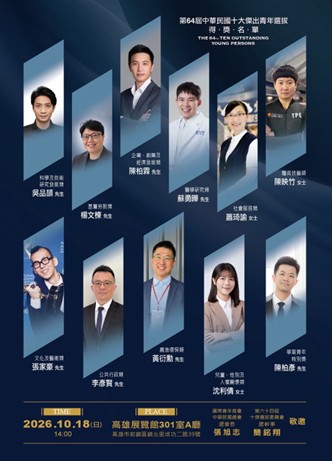
Figure 1: Dr. Yung-Yeh Su of the Cancer Research Center, selected as one of the 64th Ten Outstanding Young Persons of Taiwan (R.O.C)(Medical Research category).
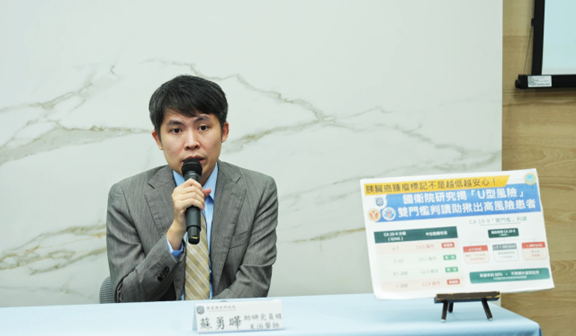
Figure 2: The new CA19-9 interpretation thresholds proposed by Dr. Su’s team.
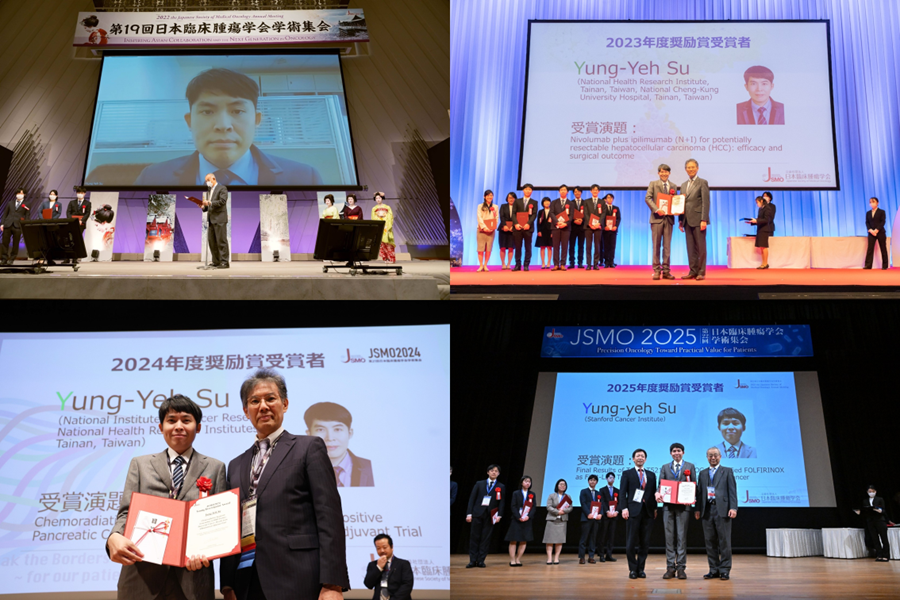
Figure 3: Dr. Su received the Young Investigator Award of the Japanese Society of Medical Oncology (JSMO) for four consecutive years (2022–2025).